
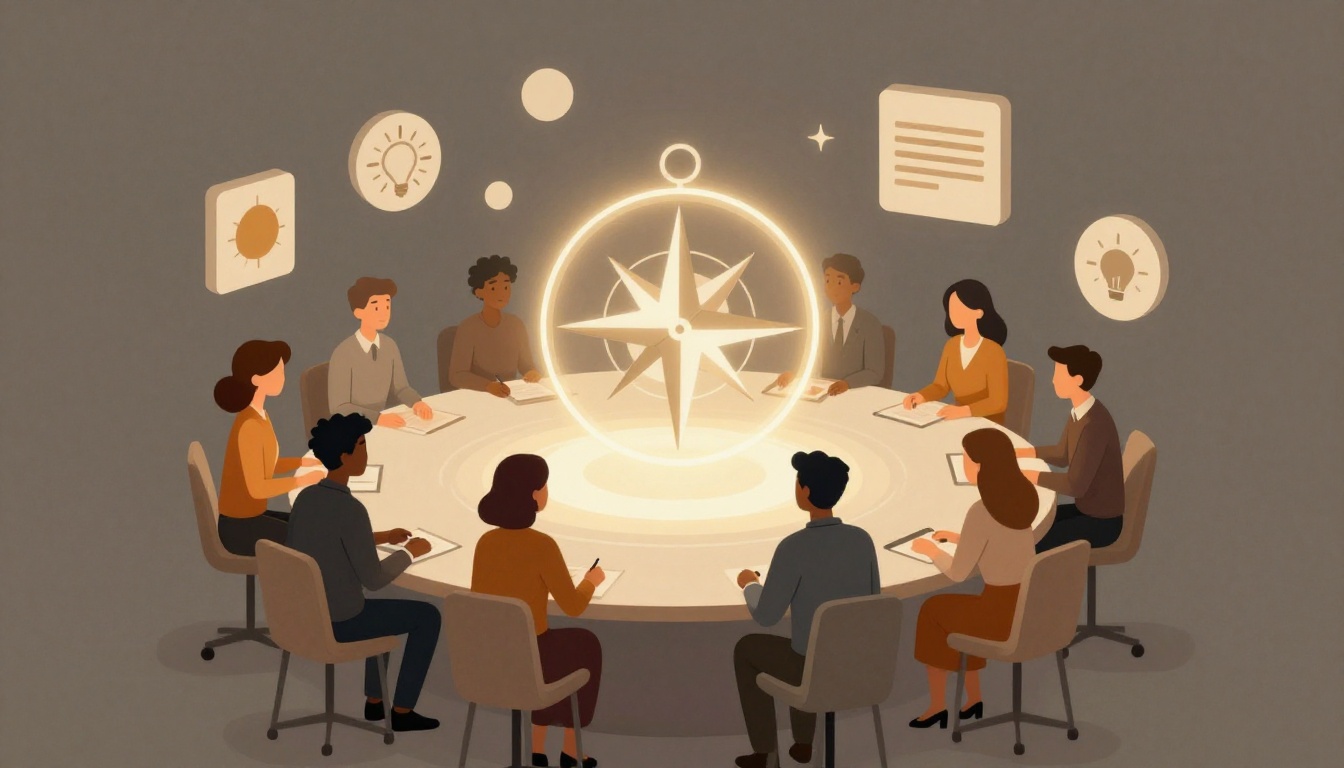
Does your team spend weeks in meetings, rehashing the same options without ever reaching a clear decision? Slow choices drain momentum, frustrate stakeholders, and cost real money. The problem isn't a lack of intelligence or effort—it's a lack of structure. A decision sprint replaces endless debate with a focused, time-boxed process that moves from idea to recommendation and decision points with speed and effectiveness. This method, popularized by Atif Rafiq in his book Decision Sprint, is designed for leaders who need to cut through ambiguity and get to action.
What are the three main phases of a decision sprint?
Select one answer.
What is a decision sprint?
A decision sprint is a structured methodology that enables movement from upstream (exploration and discovery) to downstream (decision and action) with speed and effectiveness. It has three main phases: exploration, alignment, and decision-making. The goal is to surface the proper considerations, draw conclusions, and commit to necessary actions—all within a compressed timeframe. Unlike a typical meeting, a decision sprint is a workshop-like process that produces a clear outcome, not just more discussion.
Why your team needs a decision sprint
Most teams suffer from what one expert calls "endless meeting fatigue"—the feeling that you're always talking but never deciding. A decision sprint addresses this by forcing a structured approach. It also helps secure buy-in from everyone involved because the process is transparent and inclusive. When you run a decision sprint, you're not just making a decision; you're building alignment and commitment along the way.
The three phases of a decision sprint
-
Exploration: This is where you surface the proper considerations and get to the bottom of them. It's a concerted effort to understand the problem, gather inputs, and identify assumptions. The key is to bring potential problems to the forefront early, rather than avoiding them. As Rafiq advises, don't abandon long-term exploration in favor of short-term goals—tackle complex issues head-on.
-
Alignment: In this phase, you draw conclusions based on the exploration your team has performed. You're piecing together the puzzle pieces into a coherent picture. This is where you discuss trade-offs, prioritize options, and build consensus around a recommended direction.
-
Decision-making: This is the commitment phase. You're not just agreeing in principle; you're committing to the necessary actions. The decision sprint provides workflows to implement these actions rapidly, ensuring that the decision translates into real progress.
How to run a decision sprint: a step-by-step guide
Here's a practical checklist you can apply to your next slow decision:
- Define the problem clearly: Write a one-sentence problem statement that everyone agrees on. If you can't articulate the problem, you're not ready to sprint.
- Assemble the right team: Keep it small—around 7 people is a good size. Include one member from each relevant department or function, but avoid over-stuffing the room.
- Set a time box: Decide how long your sprint will last. It could be a half-day workshop or a multi-day process, but the key is to have a fixed end time.
- Follow the LEAP framework: This stands for Listen, Explore, Align, and Plan. It provides a simple structure for moving through the sprint.
- Use "together, alone" techniques: Have individuals work on ideas independently before sharing with the group. This gives airtime to introverts and manages dominant personalities.
- Make things tangible: Use visual tools like whiteboards, sticky notes, or digital canvases. Tangible beats abstract—creating things visually communicates more than circular discussion.
- Get started over being right: Don't wait for the perfect solution. Move forward and evolve as you go.
- End with a decision: The sprint must conclude with a clear decision, not just a summary of options. If you don't have a decision, you've just had another meeting.
When to use a decision sprint
Use a decision sprint anytime your team needs to make a decision and make progress on a problem or challenge. Examples include:
- Your marketing strategy
- Organizing a client event
- Streamlining your recruitment process
- How to make more sales
- Any high-stakes initiative where you're stuck
The payoff: from strategy to action
The decision sprint approach helps organizations make better decisions by enabling better inputs—the factors decision-makers take into account when weighing options. By turning unknowns into knowns, you reduce risk and increase confidence. The result is a team that moves from strategy to action without the usual paralysis.
How the Featured Expert Can Help
Dana R. Gordon, founder of DR Gordon Consulting, offers leadership development and executive coaching to organizations across various industries. With a focus on personalized, consultant-led experiences, Dana helps small to mid-sized businesses enhance leadership skills and drive better decision-making. Visit the website to learn more and access a free guide.
Quiz: Test your understanding
What are the three main phases of a decision sprint?
- Exploration, alignment, and decision-making
- Planning, execution, and review
- Brainstorming, prototyping, and testing