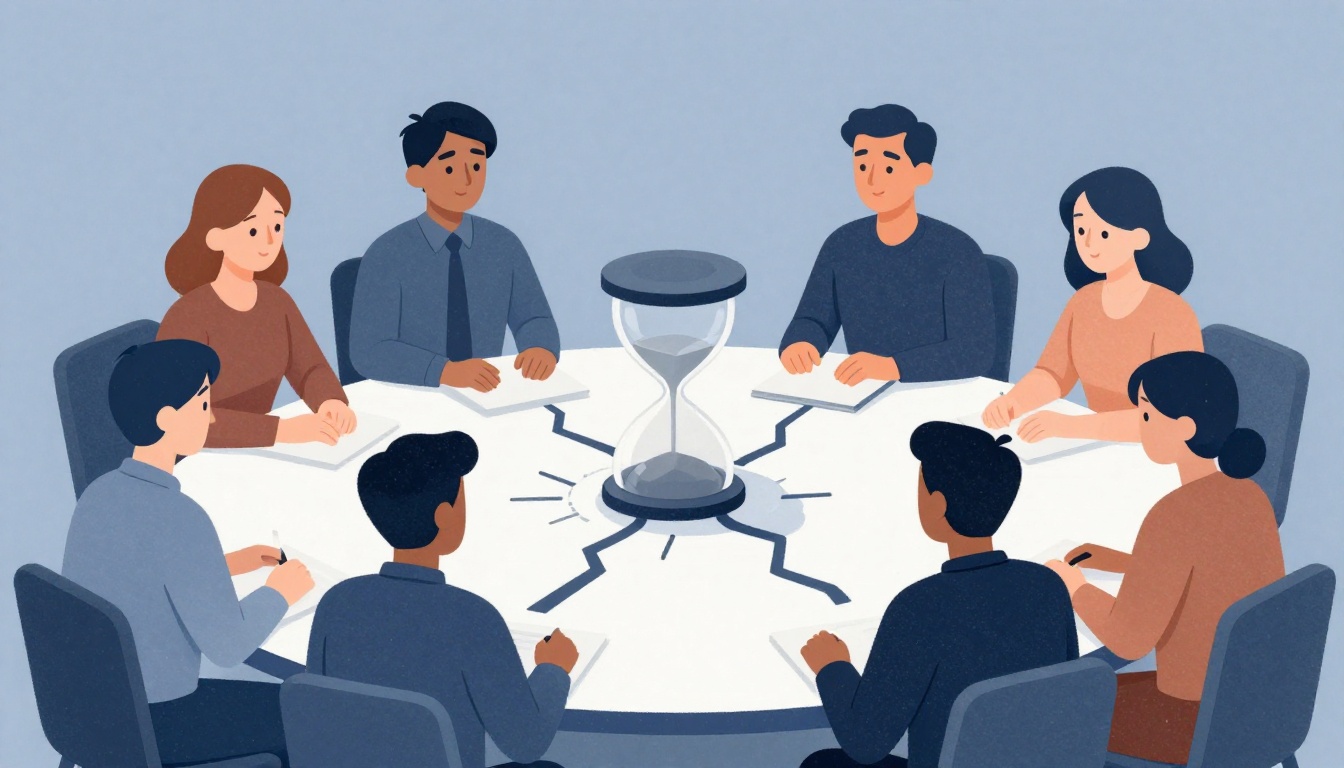
You've probably sat through a post-mortem where the team dissects a project that failed. The problem is, by then, the damage is done. What if you could identify the likely causes of failure before you commit resources and momentum? That's exactly what a pre-mortem does. It's a simple, powerful technique that flips the script: instead of asking "What could go wrong?" you ask your team to imagine the project has already failed and then work backward to explain why. This approach helps you surface risks early and address weak spots before they become costly problems (Asana, 2026).
What is the primary purpose of a pre-mortem?
Select one answer.
Why Traditional Risk Planning Falls Short
Most teams rely on risk registers or brainstorming sessions that ask, "What are the potential risks?" These methods often fail because people are reluctant to sound negative or alarmist. They tend to temper their analysis, gravitating toward the most likely bad thing to happen rather than the worst that could happen. This is where the pre-mortem shines. By making the failure a foregone conclusion, it creates psychological safety for dissenters and knowledgeable skeptics to speak up without fear of being seen as pessimistic (Harvard Business Review, 2007).
The technique, first put forward by research psychologist Gary Klein in a 2007 Harvard Business Review article, is a debiasing tool that manages the optimism bias teams often have at the start of a project. When you're in the planning phase, you don't know what you don't know. A pre-mortem forces you to confront that uncertainty head-on (Global Leaders Institute, 2024).
How to Run a Pre-Mortem in Six Steps
Here's a practical, step-by-step guide to running a pre-mortem with your team. You can adapt it to fit your timeline and culture, but the core structure remains the same.
-
Frame the scenario. Gather the key stakeholders and say, "It's [date in the future, e.g., six months from now]. Our project has failed completely. We're meeting to figure out why." This framing is crucial—it makes the failure a fact, not a possibility.
-
Silent brainstorming. Give everyone 5-10 minutes to write down every reason they can think of for why the project failed. Do this individually, before any discussion, to avoid groupthink and ensure all voices are heard (Scrum.org, n.d.).
-
Share and cluster. Go around the room and have each person share one reason at a time. Write them all down on a whiteboard or virtual canvas. As you go, cluster similar reasons into themes. This helps you see patterns and prioritize.
-
Vote on the most critical risks. Once you have a list of potential failure points, have the team vote on the top 3-5 that are most likely to happen and would have the biggest impact. This focuses your energy on what matters most (Mural, n.d.).
-
Brainstorm preventative solutions. For each top risk, brainstorm concrete actions you can take now to prevent it from happening. Assign an owner and a deadline for each action. This turns the pre-mortem from a theoretical exercise into a practical risk mitigation plan.
-
Review and integrate. After the meeting, integrate the identified risks and solutions into your project plan. The pre-mortem isn't a one-off event; it's a tool to inform your ongoing risk management. Revisit the list at key milestones to see if new risks have emerged.
Best Practices for a Successful Pre-Mortem
To get the most out of your pre-mortem, keep these best practices in mind:
- Include a diverse group. Invite people from different functions and levels. The more perspectives you have, the more risks you'll uncover (Mad Devs, 2024).
- Create a safe space. Emphasize that the goal is to identify problems, not assign blame. The pre-mortem is a no-fault exercise.
- Use a facilitator. A neutral facilitator can keep the conversation focused and ensure everyone participates.
- Keep it time-boxed. A pre-mortem doesn't need to be a full-day workshop. A 60-90 minute session is often enough to surface the key risks (Scrum.org, n.d.).
- Follow up. The real value comes from acting on the insights. Make sure the action items are tracked and completed.
The Bottom Line
A pre-mortem is a powerful tool for any leader who wants to improve decision-making and increase the likelihood of project success. By anticipating failure before it happens, you can proactively address risks, enhance collaboration, and build a more resilient plan. It's a small investment of time that can save you from a costly post-mortem later.
How the Featured Expert Can Help
Dana R. Gordon, founder of DR Gordon Consulting, helps organizations enhance leadership skills through tailored development and executive coaching. With a focus on practical, personalized approaches, Dana works with small to mid-sized businesses to strengthen decision-making and strategic thinking—skills that are essential for running effective pre-mortems and leading high-performing teams. Visit DR Gordon Consulting to learn more about how to build a culture of proactive risk management.
Quiz: What is the primary purpose of a pre-mortem?
- To assign blame for past failures
- To identify potential causes of failure before a project starts
- To celebrate project successes
Correct answer: To identify potential causes of failure before a project starts